dinsdag 28 september 2021
zaterdag 25 september 2021
Prachtig filmpje van de Kerkberg!

Toelichting Rob Smeets:
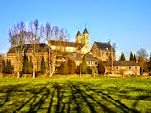
Prachtig gelegen langs de Roer ligt de basiliek van Sint Odiliënberg op een kerkheuvel. Volgens de overlevering werd in de 8e eeuw een abdij gesticht door drie Angelsaksische priesters Wiro, Plechelmus en Otgerus. Van de oorspronkelijke abdijkerk zijn bovengronds geen resten bewaard gebleven. In de 11e en 12e eeuw werd deze kerk geheel vervangen.
Prachtige opname van de Kerkberg met muziek als het begin van een monumentale film a la Sound of Music. Voor wie zich een beeld wil vormen, hoe mooi het hier is.

vrijdag 24 september 2021
Lectio divina lingua latina Liturgia Horarum Ad Officium lectionis Hebdomada XXV per annum sabbato Fluminis impetus lætificat civitatem Dei. Een vloed met zijn stromen brengt de Godsstad in vreugde.

Lectio altera
Ex Tractátibus
sancti Hilárii epíscopi in psalmos
(Ps 64, 14-15: CSEL 22, 245-246)
Tweede lezing
Uit de
Verhandelingen over de Psalmen, van de H. Hilarius, bisschop
(Ps 64, 14-15: CSEL 22, 245-246)
Een vloed met zijn stromen
brengt de Godsstad in vreugde
Gods
vloed heeft altijd water genoeg; Gij hebt hun voedsel bereid, want zo is uw
bereiding. Er is geen
enkele reden om aan die vloed te twijfelen. De Profeet zegt immers: Een vloed met stromen brengt de Godsstad in
vreugde. En de Heer zelf zegt in het Evangelie: Wie van het water drinkt, dat Ik hem geven zal, bij hem zullen stromen
van levend water uit zijn binnenste vloeien ten eeuwige leven. En elders: Wie in Mij gelooft, bij hem zullen stromen
van zijn binnenste uitgaan, zoals er geschreven staat. Hiermede doelde Hij op
de H. Geest, die in Hem geloven, zullen ontvangen. Deze vloed dus wordt met
Gods water gevuld. Want wij worden overspoeld met de gaven van de Heilige
Geest, en uit die levensbron wordt de vloed, met Gods water gevuld, ons
ingestort. Wij hebben echter ook voedsel, dat voor ons bereid is.
En wat is dat voedsel? Datgene namelijk,
waardoor wij worden voorbereid op de gemeenschap met God, door de vereniging
met zijn heilig Lichaam, die voortaan plaats vindt in de communie met zijn
heilig Lichaam. Dat immers wil deze psalm zeggen: Gij hebt hun voedsel bereid, want zo is uw bereiding: omdat wij
door die spijs, hoewel wij er voor het tegenwoordige door gered worden, er toch
voor de toekomst door worden gereed gemaakt.
Het is toch voor ons, die door het
sacrament van het Doopsel herboren zijn, een zeer grote vreugde, nu wij in ons
de beginnende werking van de Heilige Geest gevoelen, nu wij daardoor begrip
krijgen van de sacramenten, kennis van de profetieën, het woord der wijsheid,
een sterke hoop, de charismata van de genezing en de heerschappij over de
onderworpen demonen. Dat alles dringt als het ware druppelsgewijze in ons door,
wat langzaamaan begonnen veelvoudige vruchten voortbrengt.
Why is Saturday considered Mary’s day? This carries us back to the first Good Friday.

In the devotions of the church, there are certain feast days that take place once a year — such as St. Nicholas on Dec. 6 or the Feast of the Guardian Angels on Oct. 2. There are also devotions focused on certain months of the year — such as rosary month in October and the month of All Souls in November. Other items of faith are remembered every week, with certain days having a traditional emphasis — the most important being the Lord’s Day on Sunday. Another important devotion on a weekday honors the Blessed Mother each Saturday. This tradition carries us back to the first Good Friday.
The tradition of honoring Mary on Saturday is old and is based on Saturdays being the day when the Lord rested in the tomb. Tradition says that Mary’s faith did not waver during this day of mourning and that the Lord himself visited her on this day. Today, in many Spanish-speaking areas, Holy Saturday is a time to honor Nuestra Señora de la Soledad or “Our Lady of Solitude.”
Most sources trace Marian-based liturgical celebrations on Saturdays to an 8th century Benedictine monk named Alcuin. A native of England (probably York), Alcuin was a theologian, teacher and liturgist who later became Abbot of Tours (France). One of his lasting accomplishments was to develop a sacramentary or missal, a guide for the celebration of Mass. Acluin lived not long after the fall of Rome and the church’s books and records detailing how the Mass was celebrated were lost. Alcuin’s Missal, commissioned by the Emperor Charlemagne, helped unify the various styles by which the Mass had come to be celebrated around Europe. One of Alcuin’s contributions was to develop votive Masses for days of the week and he established at least one, for Saturday, in honor of Mary.
There is also a tradition, noted in the Sarum Missal of 11th century England, that cites devotions to Mary held on Saturday in the church at Constantinople. There, during evening vespers on Fridays, a curtain that veiled a statue of Mary would be lifted away revealing that statue until the close of Saturday vespers. Some say the veil was lifted in a miraculous fashion.
Pope Paul VI, in his apostolic exhortation on Marian devotions in 1974, noted that honoring the Blessed Mother on Saturday originated “especially in the East.” Through the ensuing centuries, various devotions to Mary grew and often focused on Saturdays. Some began around the time of the early Crusades, while most developed through the devotion of various religious communities such as the Servites, Franciscans and Carmelites.
The Carmelite order is especially tied to the Sabbatine Privilege. This is the pious belief that Mary, in a vision to Pope John XXII in 1322, promised she would aid souls in purgatory, on the Saturday following their deaths. Later popes ratified this devotion to Mary, when done for the purpose of drawing closer to Christ through his mother and her intercession.
Honoring the Immaculate Heart of Mary on Saturdays and reciting the rosaries on that day developed over subsequent Saturdays. These included attending Mass on the 15 Saturdays before the feast of the Holy Rosary on Oct. 7, or honoring the Seven Sorrows of Mary for seven consecutive Saturdays.
While there are references to devoting the first Saturdays of each month to reparation and prayer, especially the rosary, the best known is the reported apparitions of three shepherd children at Fatima, Portugal, in 1917. Of their visions over six months’ time, the one the children reported on July 13 said that Mary asked for the “communion of reparation” on first Saturdays.
Later, in 1925, Sr. Lucia, the only Fatima visionary still living at the time, reported that Mary again appeared to her and promised assistance at the hour of death to anyone who honored her son with prayers, including the rosary, confession and Eucharist, for five consecutive first Saturdays.
In 1974, during the period of liturgical reform following the Second Vatican Council, Pope Paul noted this long tradition of Saturday devotions and “Masses of Our Lady” calling them “an ancient and simple commemoration” that had been made “very adaptable and varied by the flexibility of the modern calendar and the number of formulas provided by the Missal.”
Honoring Mary on Saturday, the first day of our current days of weekend rest — whether at Mass, in prayer or even walking through a Mary garden — reminds us that the Blessed Mother wants to point us toward her Son who is the master of the Lord’s Day, and every other day of the week.
"Whatever its historical origins may be, today the memorial rightly emphasizes certain values to which contemporary spirituality is more sensitive. It is a remembrance of the maternal example and discipleship of the Blessed Virgin Mary who, strengthened by faith and hope, on that “great Saturday” on which Our Lord lay in the tomb, was the only one of the disciples to hold vigil in expectation of the Lord’s resurrection. It is a prelude and introduction to the celebration of Sunday, the weekly memorial of the Resurrection of Christ. It is a sign that the Virgin Mary is continuously present and operative in the life of the Church."
Sources: Thecompassnews.org and Directory on popular piety and the liturgy


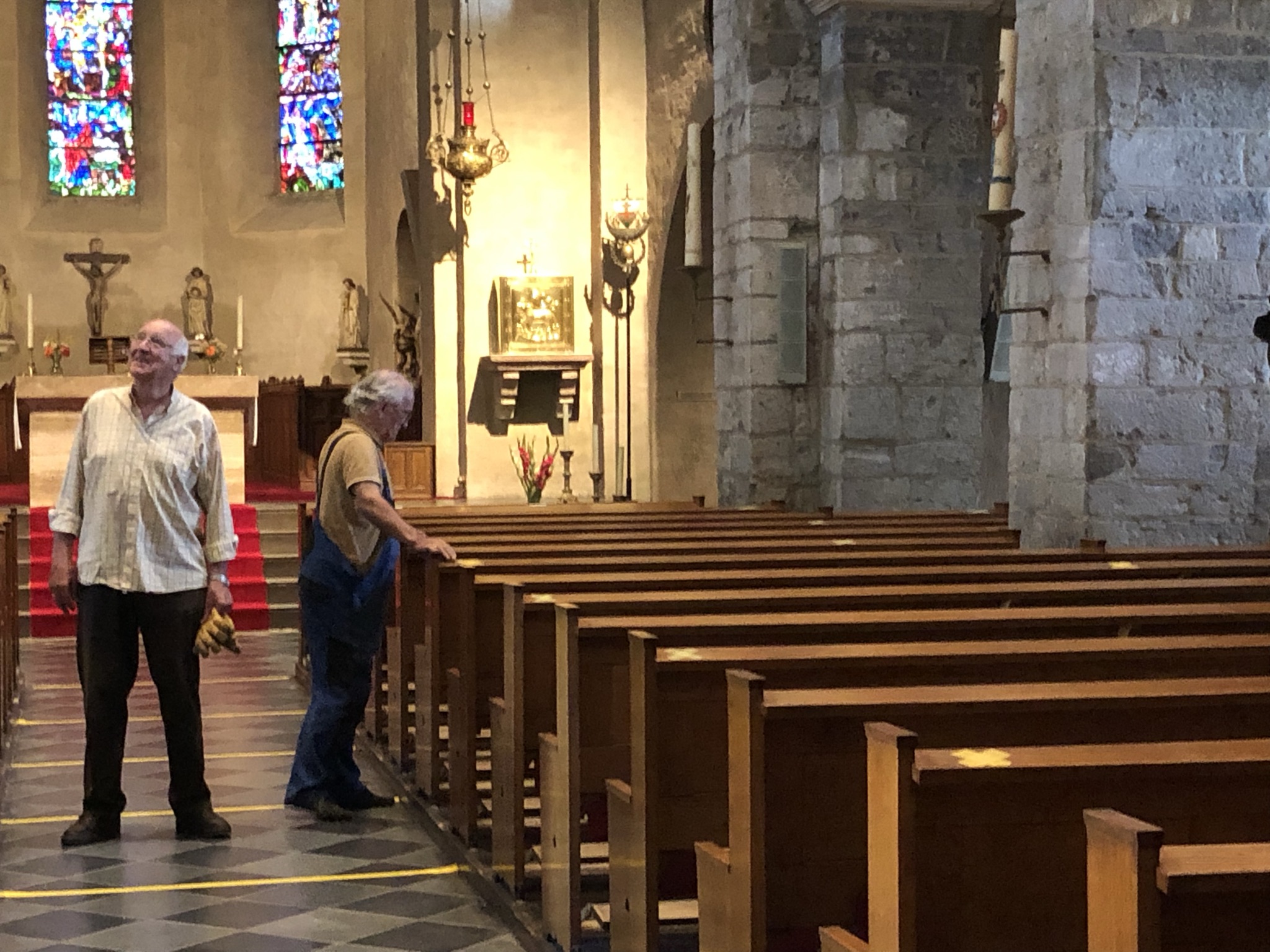


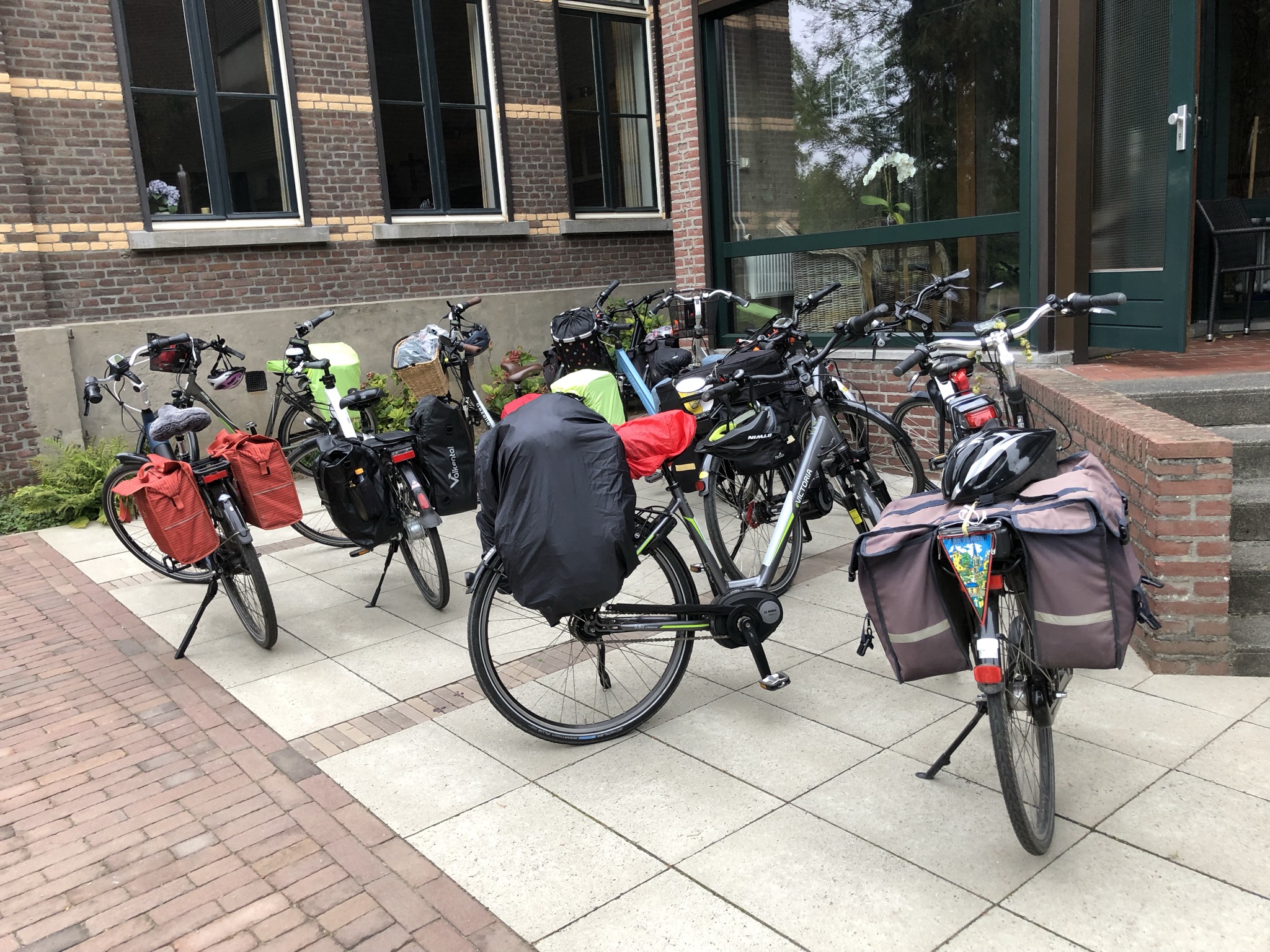
Reportage: Fietsers op de Kerkberg voor klooster en Basiliek bezoek - het begint weer te komen!
Deze week bezochten zaterdag en vrijdag twee grote groepen bezoekers de Kerkberg. Sommigen als onderdeel van een dag van oud-studiepgenoten, anderen als tussenstop onderweg naar het bedevaartsoord Kevelaer. Wilt U de Basiliek of de Kerkberg met een groep bezoeken, neem dan contact op via inlichtingen@priorijthabor.nl. We maken graag een maatwerk-afspraak.




Abonneren op:
Posts (Atom)