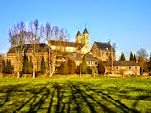
Posts tonen met het label Kerkwijding Jan van Lateranen. Alle posts tonen
Posts tonen met het label Kerkwijding Jan van Lateranen. Alle posts tonen
zaterdag 9 november 2024
9 november: Wijding basiliek Jan van Lateranen

Op 9 november gedenkt de Kerk de wijding van de Sint Jan van
Lateranen in Rome. De Jan van Lateranen is de oudste pauselijke basiliek. Het
stuk grond behoorde ooit toe aan Plautius Lateranus. Daarom wordt de kerk aangeduid met “van
Lateranen”. Dit is de kerk van de bisschop van Rome, de paus.
De eerste versie van de kerk werd in de vierde eeuw door
keizer Constantijn gebouwd. Op deze plaats zou keizer Constantijn het heilig Doopsel hebben ontvangen,
Na
aardbeving, brand en plundering werd de kerk enkele malen, laatstelijk in 1589,
opnieuw opgetrokken.
De andere pauselijke
kerken zijn: de Santa Maria Maggiore, de Sint Paulus buiten de Muren en de Sint
Pieter. De Sint Pieter is de kerk boven
het graf van Petrus. Volgens traditie zou in het altaar van de Jan van Lateranen
een deel van de zetel (cathedra) van Petrus opgenomen zijn. Het kerkgebouw is toegewijd aan Sint Jan de
Doper en Sint Jan de Evangelist, maar op de eerste plaats aan Christus de
Verlosser.
De liturgische feestdag van de kerkwijding van de Sint-Jan
is 9 november. Sinds de 12de eeuw wordt het feest op deze dag gevierd. “Deze
gedachtenis was aanvankelijk beperkt tot de stad Rome, maar werd uiteindelijk
uitgebreid naar de universele kerk. De reden daarvoor was het gegroeide inzicht
dat de bisschop van Rome, wiens cathedra in de Sint-Jan staat, de opvolger is
van de apostel Petrus en daarom het hoofd is van de gehele liefdesgemeenschap
van Christus, zoals Ignatius van Antiochië schreef”, zie ook rkk.nl.
Met de liturgische feestdag gedenken we geen gebouw van stenen en mortel, maar de
Godgewijdheid van een plaats waar sinds vele eeuwen mensen samen komen om de sacra
mysteria (heilige geheimen) te vieren. Die gedachte klinkt door in de teksten
van deze dag, zie ook hierna.

maandag 8 november 2021
9 november Kerkwijding van de basiliek van Lateranen

Lectio altera Lezingendienst
Uit een preek van de heilige Caesarius, bisschop van Arles († 542)
Allen zijn wij door het doopsel tempel van God geworden.
Dierbare broeders en zusters, door de goedheid van Christus vieren wij vandaag met gejuich en vreugde de dag van de inwijding van deze tempel, ofschoon wijzelf Gods ware en levende tempel moeten zijn. Toch vieren de christenvolken deze feestdag van onze moederkerk terecht zo trouw, omdat zij inzien dat zij in de kerk geestelijk herboren zijn: wij die door de eerste geboorte een voorwerp van Gods toorn waren, hebben het door de tweede geboorte verdiend een voorwerp van zijn barmhartigheid te worden. De eerste geboorte bracht ons immers voort om te sterven, de tweede riep ons opnieuw ten leven.
Dierbaren, vóór het doopsel waren wij allen een heiligdom van de duivel, na het doopsel mogen wij een tempel van Christus zijn. Als wij over het heil van onze ziel dieper nadenken, dan zien wij dat wij een werkelijke, levende tempel van God zijn. God woont niet alleen in wat door mensenhand gemaakt is (vgl. Hand. 7, 48) en evenmin in een huis van hout of steen, maar Hij woont vooral in een ziel die naar Gods beeld gemaakt en door de hand van de kunstenaar zelf geschapen is. Zo heeft immers de heilige apostel Paulus gezegd: ‘De tempel van God is heilig, en die tempel zijt gij’ (1 Kor. 3, 17).
Aangezien nu Christus door zijn komst de duivel uit ons hart verdreven heeft om in ons een tempel voor zich te bereiden, moeten wij met zijn hulp en naar eigen vermogen ons ervoor inspannen dat Hij door onze boze werken geen onrecht lijdt. Immers, wie slecht handelt, doet Christus onrecht. Ik heb al gezegd: voordat Christus ons verloste, waren wij een huis van de duivel. Daarna mogen wij Gods huis zijn: God heeft ons immers tot zijn huis willen maken.
Als wij daarom, dierbaren, de dag van de inwijding van deze tempel van God met vreugde willen vieren, moeten wij de levende tempel van God in ons niet door boze werken vernietigen. Laat mij het als volgt zeggen - en dat kunnen allen begrijpen -: telkens als wij naar de kerk komen, moeten wij ons hart zo voorbereiden als wijzelf de kerk willen aantreffen.
Wilt gij een stralende, schitterende basiliek aantreffen? Goed, maar besmeurt uw hart dan niet met het vuil van de zonden. Als gij wilt dat de basiliek vol licht is, wil God dat ook uw hart niet verduisterd is, maar dat er gebeurt wat de Heer zegt: in ons moet het licht van goede werken schijnen en Hij die in de hemel is, moet verheerlijkt worden. Zoals gij in deze tempel binnentreedt, zo wil God in uw hart binnentreden. Hij heeft zelf immers beloofd: ‘Ik zal onder hen wonen en met hen omgaan’ (2 Kor. 6, 16).
November 9 - Feast of the Dedication of Saint John Lateran - the mother church of all Christendom

THE CHURCH AS THE ASSEMBLY OF THE PEOPLE OF GOD
The Church is called Catholic or universal because it has spread throughout the entire world, from one end of the earth to the other. Again, it is called Catholic because it teaches fully and unfailingly all the doctrines which ought to be brought to men’s knowledge, whether concerned with visible or invisible things, with the realities of heaven or the things of earth. Another reason for the name Catholic is that the Church brings under religious obedience all classes of men, rulers, and subjects, learned and unlettered. Finally, it deserves the title Catholic because it heals and cures unrestrictedly every type of sin that can be committed in soul or in body, and because it possesses within itself every kind of virtue that can be named, whether exercised in actions or in words or in some kind of spiritual charism.
It is most aptly called a church, which means an “assembly of those called out,” because it “calls out” all men and gathers them together, just as the Lord says in Leviticus: Assemble all the congregation at the door of the tent of meeting [cf Leviticus 8:3]. It is worth noting also that the word “assemble” is used for the first time in Scriptures at this moment when the Lord appoints Aaron high priest. So in Deuteronomy, God says to Moses: Assemble the people before me and let them hear my words, so that they may learn to fear me [cf Deuteronomy 4:10]. There is a further mention of the assembly in the passage about the tablets of the Law: And on them were written all the words which the Lord had spoken to you on the mountain out of the midst of the fire, on the day of the assembly [cf Deuteronomy 9:10]; it is as though he had said, even more clearly, “on the day you were called out by God and gathered together.” So too the psalmist says: I will give thanks to you in the great assembly, O Lord; in the mighty throng I will praise you [cf Psalm 35:18].
Long ago the psalmist sang: Bless God in the assembly; bless the Lord, you who are Israel’s sons [cf Psalm 68:27]. But now the Savior has built a second holy assembly, our Christian Church, from the Gentiles. It was of this that he spoke to Peter: On this rock, I will build my Church, and the powers of death shall not prevail against it [cf Matthew 16:18].
Now that the single church which was in Judea has been rejected, the churches of Christ are already multiplying throughout the world, and, of them, it is said in the psalms: Sing a new song to the Lord, let his praise be sung in the assembly of the saints [cf Psalm 149:1]. Taking up the same theme the prophet says… I have no pleasure in you, says the Lord of hosts [Malachi 1:10]; and immediately he adds: For from the rising of the sun to its setting, my name is glorified among the nations [cf Malachi 1:11]. Of this holy, Catholic Church Paul writes to Timothy: That you may know how one ought to behave in the household of God, which is the Church of the living God, the pillar and bulwark of the truth [cf 1 Timothy 3:15].
We thank spiritualdirection.com
Abonneren op:
Posts (Atom)