Posts tonen met het label HH. Petrus en Paulus. Alle posts tonen

zondag 29 juni 2025

Homily Pope Benedict XVI Solemnity of sts Peter and Paul

The Feast of the Holy Apostles Peter and Paul is at the same time a grateful memorial of the great witnesses of Jesus Christ and a solemn confession for the Church: one, holy, catholic and apostolic. It is first and foremost a feast of catholicity. The sign of Pentecost - the new community that speaks all languages and unites all peoples into one people, in one family of God -, this sign has become a reality. Our liturgical assembly, at which Bishops are gathered from all parts of the world, people of many cultures and nations, is an image of the family of the Church distributed throughout the earth.

Strangers have become friends; crossing every border, we recognize one another as brothers and sisters. This brings to fulfilment the mission of St Paul, who knew that he was the "minister of Christ Jesus among the Gentiles, with the priestly duty of preaching the Gospel of God so that the Gentiles [might] be offered up as a pleasing sacrifice, consecrated by the Holy Spirit" (Rom 15: 16).
The purpose of the mission is that humanity itself becomes a living glorification of God, the true worship that God expects: this is the deepest meaning of catholicity - a catholicity that has already been given to us, towards which we must constantly start out again. Catholicity does not only express a horizontal dimension, the gathering of many people in unity, but also a vertical dimension: it is only by raising our eyes to God, by opening ourselves to him, that we can truly become one.

Like Paul, Peter also came to Rome, to the city that was a centre where all the nations converged and, for this very reason, could become, before any other, the expression of the universal outreach of the Gospel. As he started out on his journey from Jerusalem to Rome, he must certainly have felt guided by the voices of the prophets, by faith and by the prayer of Israel.

The mission to the whole world is also part of the proclamation of the Old Covenant: the people of Israel were destined to be a light for the Gentiles. The great Psalm of the Passion, Psalm 22[21], whose first verse Jesus cried out on the Cross: "My God, my God, why have you forsaken me?", ends with the vision: "All the ends of the earth shall remember and turn to the Lord; all the families of the nations shall bow down before him" (Ps 22[21]: 28). When Peter and Paul came to Rome, the Lord on the Cross who had uttered the first line of that Psalm was risen; God's victory now had to be proclaimed to all the nations, thereby fulfilling the promise with which the Psalm concludes.

Catholicity means universality - a multiplicity that becomes unity; a unity that nevertheless remains multiplicity. From Paul's words on the Church's universality we have already seen that the ability of nations to get the better of themselves in order to look towards the one God, is part of this unity. In the second century, the founder of Catholic theology, St Irenaeus of Lyons, described very beautifully this bond between catholicity and unity and I quote him. He says: "The Church spread across the world diligently safeguards this doctrine and this faith, forming as it were one family: the same faith, with one mind and one heart, the same preaching, teaching and tradition as if she had but one mouth. Languages abound according to the region but the power of our tradition is one and the same. The Churches in Germany do not differ in faith or tradition, neither do those in Spain, Gaul, Egypt, Libya, the Orient, the centre of the earth; just as the sun, God's creature, is one alone and identical throughout the world, so the light of true preaching shines everywhere and illuminates all who desire to attain knowledge of the truth" (Adv. Haer. I 10, 2). The unity of men and women in their multiplicity has become possible because God, this one God of heaven and earth, has shown himself to us; because the essential truth about our lives, our "where from?" and "where to?" became visible when he revealed himself to us and enabled us to see his face, himself, in Jesus Christ. This truth about the essence of our being, living and dying, a truth that God made visible, unites us and makes us brothers and sisters. Catholicity and unity go hand in hand. And unity has a content: the faith that the Apostles passed on to us in Christ's name.

I am pleased that yesterday, the Feast of St Irenaeus and the eve of the Solemnity of Sts Peter and Paul, I was able to give the Church a new guide for the transmission of the faith that will help us to become better acquainted with and to live better the faith that unites us: the Compendium of the Catechism of the Catholic Church. The essential content of what is presented in detail in the complete Catechism, through the witness of the saints of all the ages and with reflections that have matured in theology, is summed up here in this book and must then be translated into everyday language and constantly put into practice. The book is in the form of a dialogue with questions and answers.

The 14 images associated with the various areas of faith are an invitation to contemplation and meditation. In other words, a visible summary of what the written text develops in full detail. At the beginning there is a reproduction of a 6th-century icon of Christ, kept at Mount Athos, that portrays Christ in his dignity as Lord of the earth but at the same time also as a herald of the Gospel which he holds in his hand. "I am who am", this mysterious name of God presented in the Old Testament, is copied here as his own name: all that exists comes from him; he is the original source of all being. And since he is one, he is also ever present, ever close to us and at the same time, ever in the lead: an "indicator" on our way through life, especially since he himself is the Way. This book cannot be read as if it were a novel. Its individual sections must be calmly meditated upon and, through the images, its content must be allowed to penetrate the soul. I hope that it will be received as such and become a reliable guide in the transmission of the faith.

We have said that the catholicity of the Church and the unity of the Church go together. The fact that both dimensions become visible to us in the figures of the holy Apostles already shows us the consequent characteristic of the Church: she is apostolic. What does this mean?

The Lord established Twelve Apostles just as the sons of Jacob were 12. By so doing he was presenting them as leaders of the People of God which, henceforth universal, from that time has included all the peoples. St Mark tells us that Jesus called the Apostles so "to be with him, and to be sent out" (Mk 3: 14). This seems almost a contradiction in terms. We would say: "Either they stayed with him or they were sent forth and set out on their travels". Pope St Gregory the Great says a word about angels that helps us resolve this contradiction. He says that angels are always sent out and at the same time are always in God's presence, and continues, "Wherever they are sent, wherever they go, they always journey on in God's heart" (Homily, 34, 13). The Book of Revelation described Bishops as "angels" in their Church, so we can state: the Apostles and their successors must always be with the Lord and precisely in this way - wherever they may go - they must always be in communion with him and live by this communion.

The Church is apostolic, because she professes the faith of the Apostles and attempts to live it. There is a unity that marks the Twelve called by the Lord, but there is also continuity in the apostolic mission. St Peter, in his First Letter, described himself as "a fellow elder" of the presbyters to whom he writes (5: 1). And with this he expressed the principle of apostolic succession: the same ministry which he had received from the Lord now continues in the Church through priestly ordination. The Word of God is not only written but, thanks to the testimonies that the Lord in the sacrament has inscribed in the apostolic ministry, it remains a living word. Thus, I now address you, dear Brother Bishops. I greet you with affection, together with your relatives and the pilgrims from your respective Dioceses. You are about to receive the Pallium from the hands of the Successor of Peter. We had it blessed, as though by Peter himself, by placing it beside his tomb. It is now an expression of our common responsibility to the "chief Shepherd" Jesus Christ, of whom Peter speaks (I Pt 5: 4). The Pallium is an expression of our apostolic mission. It is an expression of our communion whose visible guarantee is the Petrine ministry. Unity as well as apostolicity are bound to the Petrine service that visibly unites the Church of all places and all times, thereby preventing each one of us from slipping into the kind of false autonomy that all too easily becomes particularization of the Church and might consequently jeopardize her independence. So, let us not forget that the purpose of all offices and ministries is basically that "we [all] become one in faith and in the knowledge of God's son, and form that perfect man who is Christ come to full stature", so that the Body of Christ may grow and build "itself up in love" (Eph 4: 13, 16).

In this perspective, I warmly and gratefully greet the Delegation of the Orthodox Church of Constantinople, sent by the Ecumenical Patriarch Bartholomew I to whom I address a cordial thought, and led by Metropolitan Ioannis, who has come for our feast day and is taking part in our celebration. Even though we may not yet agree on the issue of the interpretation and importance of the Petrine Ministry, we are nonetheless together in the apostolic succession, we are deeply united with one another through episcopal ministry and through the sacrament of priesthood, and together profess the faith of the Apostles as it is given to us in Scripture and as it was interpreted at the great Councils. At this time in a world full of scepticism and doubt but also rich in the desire for God, let us recognize anew our common mission to witness to Christ the Lord together, and on the basis of that unity which has already been given to us, to help the world in order that it may believe. And let us implore the Lord with all our hearts to guide us to full unity so that the splendour of the truth, which alone can create unity, may once again become visible in the world.

Today's Gospel tells of the profession of faith of St Peter, on whom the Church was founded: "You are the Messiah... the Son of the living God" (Mt 16: 16). Having spoken today of the Church as one, catholic and apostolic but not yet of the Church as holy, let us now recall another profession of Peter, his response on behalf of the Twelve at the moment when so many abandoned Christ: "We have come to believe; we are convinced that you are God's holy one" (Jn 6: 69). What does this mean?

Jesus, in his great priestly prayer, says that he is consecrating himself for his disciples, an allusion to the sacrifice of his death (cf. Jn 17: 19). By saying this, Jesus implicitly expresses his role as the true High Priest who brings about the mystery of the "Day of Reconciliation", no longer only in substitutive rites but in the concrete substance of his own Body and Blood. The Old Testament term "the Holy One of the Lord" identified Aaron as the High Priest who had the task of bringing about Israel's sanctification (Ps 106[105]: 16; Vulgate: Sir 45: 6). Peter's profession of Christ, whom he declares to be the Holy One of God, fits into the context of the Eucharistic Discourse in which Jesus announces the Day of Reconciliation through the sacrificial offering of himself: "the bread I will give is my flesh, for the life of the world" (Jn 6: 51). So this profession is the background of the priestly mystery of Jesus, his sacrifice for us all. The Church is not holy by herself; in fact, she is made up of sinners - we all know this and it is plain for all to see. Rather, she is made holy ever anew by the Holy One of God, by the purifying love of Christ. God did not only speak, but loved us very realistically; he loved us to the point of the death of his own Son. It is precisely here that we are shown the full grandeur of revelation that has, as it were, inflicted the wounds in the heart of God himself. Then each one of us can say personally, together with St Paul, I live "a life of faith in the Son of God, who loved me and gave himself for me" (Gal 2: 20).

Let us pray to the Lord that the truth of these words may be deeply impressed in our hearts, together with his joy and with his responsibility; let us pray that shining out from the Eucharistic Celebration it will become increasingly the force that shapes our lives.

Bishop Barron on Saints Peter and Paul

HH Petrus en Paulus "Samen hebben zij de ene gemeenschap van Christus opgebouwd"

29 juni Hoogfeest van de HH. Apostelen Petrus en Paulus

PREFATIE


Heilige Vader, machtige eeuwige God,
om recht te doen aan uw heerlijkheid,
om heil en genezing te vinden zullen wij U danken,
altijd en overal.

Want het feest van uw heilige Apostelen
vervult ons met vreugde:
Petrus, die als eerste van allen het geloof heeft beleden,
Paulus, die het als leraar heeft verklaard.
De een heeft met de heilige rest van Israël de jonge Kerk gesticht;
de ander werd de leraar van de volkeren, van allen die geroepen zijn.
Samen hebben zij, ieder op zijn eigen wijze,
de ene gemeenschap van Christus opgebouwd,
en nu zij beiden dezelfde kroon ontvangen hebben,
worden zij in heel de wereld samen gevierd.

Daarom, met alle Engelen en Heiligen,
loven en aanbidden wij U zolang er woorden zijn en zingen U vol vreugde:

Sanctus, Sanctus, Sanctus…

Lezingen H. Mis 29 juni - HH. Petrus en Paulus - apostelen - hoogfeest

Eerste lezing (Hand. 12, 1-11)
Uit de Handelingen van de Apostelen.
In die dagen legde koning Herodes de hand op enkele leden van de kerk om hen te mishandelen: Jakobus, de broer van Johannes, liet hij met het zwaard ter dood brengen. Omdat hij bemerkte dat dit de joden aangenaam was, liet hij ook nog Petrus gevangen nemen. Het was juist in de dagen van het ongedesemde brood. Toen hij hem in handen had gekregen, wierp hij hem in de gevangenis en liet hem bewaken door vier groepen soldaten, elk van vier man; het was zijn bedoeling Petrus na het paasfeest voor het volk te leiden. Terwijl Petrus in de gevangenis zat, werd door de kerk vurig voor hem tot God gebeden. In de nacht vóórdat Herodes hem wilde laten voorleiden, lag Petrus met twee kettingen vastgebonden, te slapen tussen twee soldaten, terwijl ook voor de poort van de gevangenis wacht werd gehouden. Opeens stond een engel des Heren bij hem en was de cel hel verlicht. Hij stootte Petrus in de zij, wekte hem en sprak: “Sta vlug op.” Meteen vielen de kettingen van zijn handen. Vervolgens zei de engel: “Doe uw gordel om en bind uw sandalen onder.” Petrus deed het. De engel hernam: “Sla uw mantel om en volg mij.” Hij ging mee naar buiten zonder nog te beseffen dat het werkelijkheid was wat de engel deed: hij meende een visioen te zien. Zij passeerden de eerste en de tweede wacht en kwamen aan de ijzeren poort, die toegang gaf tot de stad; deze ging vanzelf voor hen open. Zij traden naar buiten, liepen een straat ver en eensklaps was de engel verdwenen. Toen kwam Petrus tot zichzelf en zei: “Nu weet ik zeker, dat de Heer zijn engel heeft gezonden en mij heeft ontrukt aan de macht van Herodes en aan alles wat het volk der Joden verwachtte.”

Tweede lezing (2 Tim. 4, 6-8.17-18)
Uit de tweede brief van de heilige apostel Paulus aan Timóteüs.
Dierbare, wat mij betreft, mijn bloed wordt weldra geplengd, het uur van mijn heengaan is nabij. Ik heb de goede strijd gestreden, de wedloop voleind, het geloof bewaard. Nu wacht mij de krans der gerechtigheid waarmee de Heer, de rechtvaardige Rechter, mij zal belonen op de grote dag, en niet alleen mij, maar allen die met liefde uitzien naar zijn komst. De Heer heeft mij terzijde gestaan en mij kracht gegeven om mijn ambt als prediker van het evangelie ten einde toe te vervullen, zodat alle volken ervan horen, en ik werd verlost uit de muil van de leeuw. De Heer zal mij blijven beschermen tegen alle boze aanslagen en mij behouden overbrengen naar zijn hemels koninkrijk. Hem zij de heerlijkheid in de eeuwen der eeuwen! Amen.

Evangelie (Mt. 16, 13-19)
In die tijd, toen Jezus in de streek van Caesarea van Filippus gekomen was, stelde Hij zijn leerlingen deze vraag: “Wie is, volgens de opvatting van de mensen, de Mensenzoon?” Zij antwoordden: “Sommigen zeggen Johannes de Doper, anderen Elia, weer anderen Jeremia of een van de profeten.” “Maar gij - sprak Hij tot hen - wie zegt gij dat Ik ben?” Simon Petrus antwoordde: “Gij zijt de Christus, de Zoon van de levende God.” Jezus hernam: “Zalig zijt gij, Simon, zoon van Jona, want niet vlees en bloed hebben u dit geopenbaard, maar mijn Vader die in de hemel is. Op mijn beurt zeg Ik u: Gij zijt Petrus; en op deze steenrots zal Ik mijn kerk bouwen en de poorten der hel zullen haar niet overweldigen. Ik zal u de sleutels geven van het Rijk der hemelen en wat gij zult binden op aarde, zal ook in de hemel gebonden zijn en wat gij zult ontbinden op aarde, zal ook in de hemel ontbonden zijn.”

woensdag 29 juni 2022

29 juni Hoogfeest van de heilige Petrus en Paulus

29 juni
Martyrologium Romanum:
Het hoogfeest van de heilige Petrus en Paulus. Simon, zoon van Jona en broer van Andreas, beleed als eerste onder de leerlingen Jezus als de Christus, de Zoon van de levende God, en werd door Hem Petrus genoemd.
Paulus, de apostel van de heidenen, predikte de gekruisigde Christus aan Joden en Grieken. Beiden verkondigden met geloof en liefde het evangelie van Jezus Christus in de stad Rome en stierven onder keizer Nero als martelaar. De eerste werd, zoals de overlevering vertelt,  met het hoofd naar beneden aan het kruis geslagen en op de Vaticaanse heuvel bij de Via Triumphalis begraven,  de ander werd met de dood door het zwaard gestraft en aan de Via Ostiense in een graf gelegd.

Op deze dag wordt door heel de wereld hun triomf gevierd met gelijke eer en verering.

Lectio divina Petrus en Paulus "De martelaren hebben gezien wat zij predikten"


29 juni Hoogfeest H.H. Petrus en Paulus, Apostelen

Liturgia Horarum / Getijdengebed:

Lectio altera

Ex Sermónibus sancti Augustíni epíscopi (Sermo 295, 1-2. 4. 7-8: PL 38, 1348-1352)

Isti martyres viderunt quod prædicaverunt

Istum nobis diem beatissimórum apostolórum Petri et Pauli pássio consecrávit. Non de obscúris alíquibus martýribus lóquimur. In omnem terram éxiit sonus eórum, et in fines orbis terræ verba eórum. Isti mártyres vidérunt quod prædicavérunt, secúti æquitátem, confiténdo veritátem, moriéndo pro veritáte.

Beátus Petrus, primus Apostolórum, véhemens Christi amátor, qui méruit audíre: Et ego dico tibi quia tu es Petrus. Díxerat enim ipse: Tu es Christus Fílius Dei vivi. Christus illi: Et ego dico tibi quia tu es Petrus, et super hanc petram ædificábo Ecclésiam meam. Super hanc petram ædificábo fidem, quam confitéris. Super hoc quod dixísti: Tu es Christus Fílius Dei vivi, ædificábo Ecclésiam meam. Tu enim Petrus. A petra Petrus, non a Petro petra. Sic a petra Petrus, quómodo a Christo christiánus.

Dóminus Iesus discípulos suos ante passiónem suam, sicut nostis, elégit, quos Apóstolos appellávit. Inter hos pæne ubíque solus Petrus totíus Ecclésiæ méruit gestáre persónam. Propter ipsam persónam, quam totíus Ecclésiæ solus gestábat, audíre méruit: Tibi dabo claves regni cælórum. Has enim claves non homo unus, sed únitas accépit Ecclésiæ. Hinc ergo Petri excelléntia prædicátur, quia ipsíus universitátis et unitátis Ecclésiæ figúram gessit, quando ei dictum est: Tibi trado, quod ómnibus tráditum est. Nam ut novéritis Ecclésiam accepísse claves regni cælórum, audíte in álio loco quid Dóminus dicat ómnibus Apóstolis suis: Accípite Spíritum sanctum. Et contínuo: Si cui dimiséritis peccáta, dimitténtur ei; si cuius tenuéritis, tenebúntur.

Mérito étiam post resurrectiónem Dóminus ipsi Petro oves suas commendávit pascéndas. Non enim inter discípulos solus méruit páscere domínicas oves; sed quando Christus ad unum lóquitur, únitas commendátur; et Petro prímitus, quia in Apóstolis Petrus est primus. Noli tristis esse, Apóstole; respónde semel, respónde íterum, respónde tértio. Ter vincat in amóre conféssio, quia ter victa est in timóre præsúmptio. Solvéndum est ter, quod ligáveras ter. Solve per amórem, quod ligáveras per timórem. Et tamen Dóminus semel et íterum et tértio oves suas commendávit Petro.

Unus dies passiónis duóbus apóstolis. Sed et illi duo unum erant; quamquam divérsis diébus pateréntur, unum erant. Præcéssit Petrus, secútus est Paulus. Celebrámus diem festum apostolórum nobis sánguine consecrátum. Amémus fidem, vitam, labóres, passiónes, confessiónes, prædicatiónes.

Uit de Preken van de H. Augustinus, bisschop

Die martelaren hebben gezien, wat zij predikten

Deze dag is geheiligd door het lijden van de allerzaligste apostelen Petrus en Paulus. We spreken hier niet over enkele onbekende martelaren. Over heel de aarde galmen hun klanken, en tot aan de grenzen der wereld hun tonen. Die martelaren hebben gezien, wat zij predikten, namelijk de gerechtigheid, door de waarheid te leren en voor de waarheid te sterven.

De zalige Petrus was de eerste der Apostelen, een vurig minnaar van Christus, die verdiende de woorden te horen: En Ik zeg U: Gij zijt Petrus. Hij had zelf immers gezegd: Gij zijt de Christus, de Zoon van de levende God. En Christus tot hem: En Ik zeg u: Gij zijt Petrus, en op deze steenrots zal Ik mijn Kerk bouwen. Op deze steenrots zal Ik het geloof bouwen, dat gij belijdt. Op dat, wat gij gezegd hebt: Gij zijt de Christus, de Zoon van de levende God, zal Ik mijn Kerk bouwen. Gij toch zijt een Petrus. Een Petrus door de rots, niet een rots door petra. Zo is van rots (petra) het woord Petrus afgeleid, zoals het woord ‘christen’ van Christus.

De Heer Jezus heeft vóór zijn Lijden, zoals u weet, zijn leerlingen gekozen, die Hij ‘Apostelen’ noemde. Onder hen was het bijna overal alleen Petrus, die heel de Kerk in zijn persoon vertegenwoordigde. Om die persoonlijkheid, die hij van heel de Kerk in zich droeg, verdiende hij te horen: U zal Ik de sleutels geven van het Rijk der hemelen. Want die sleutels ontving niet een enkele persoon, maar de eenheid van de Kerk. Vandaar dus wordt de uitnemendheid van Petrus aangekondigd, omdat hij in zijn figuur de algemeenheid en de eenheid van de Kerk voorstelt, wanneer tot hem gezegd wordt: Ik geef u, wat aan allen tezamen gegeven werd. Want om te weten, dat de Kerk de sleutels des hemels heeft ontvangen, moet u letten op wat de Heer op een andere plaats tot al zijn Apostelen zegt: Ontvangt de Heilige Geest. En daarbij aansluitend: Aan wie gij hun zonden vergeeft, zijn die vergeven; aan wie gij hun zonden houdt, zijn die gehouden.

Terecht ook heeft de Heer na zijn Verrijzenis aan Petrus zelf opgedragen zijn schapen te weiden. Want onder de leerlingen verdiende hij niet alleen de kudde van de Heer te weiden; maar wanneer Christus tot één persoon spreekt, wordt de éénheid gesymboliseerd; en zo spreekt Hij tot Petrus het eerst, omdat Petrus de eerste is onder de Apostelen. Wees niet bedroefd, Apostel; antwoord éénmaal, antwoord opnieuw, antwoord voor de derde maal. Moge uw belijdenis in liefde, tot driemaal toe, overwinnen, omdat de overmoed in vrees u driemaal heeft overwonnen. Driémaal moet ontslagen worden, wat gij driemaal hebt gebonden. Maak vrij de liefde, welke gij gebonden had door de vrees. En de Heer heeft éénmaal en weer opnieuw en voor de derde maal zijn schapen aan Petrus toevertrouwd.

Nu is één dag van het lijden voor twéé Apostelen. Maar ook die twee waren één. Hoewel ze op verschillende dagen hebben geleden, waren ze toch één. Petrus ging vóór, Paulus volgde. Laten wij deze feestdag vieren, die voor ons door het bloed van de Apostelen is gewijd. Laten wij beminnend hun geloof bewonderen, hun leven, hun arbeid, hun lijden, hun belijdenis, hun prediking.

(S. Augustini, Sermo 295, 1-2. 4. 7-8: PL 38, 1348-1352)..


donderdag 18 november 2021

Bishop Barron on Saints Peter and Paul

18 november - Kerkwijding van de basilieken van de apostelen Petrus en Paulus

Deze kerken werden achtereenvolgens door paus Silvester en paus Siricius in de 4e eeuw ingewijd. Reeds in de 12e eeuw werd de verjaardag van dit feit ter plaatse, in de Vaticaanse basiliek en in de basiliek van de heilige Paulus aan de weg naar Ostia, herdacht. In jongere tijden werd deze viering over alle kerken van de Romeinse ritus uitgebreid. Evenals op de verjaardag van de wijding van de basiliek van Maria de Meerdere het moederschap van de heilige maagd Maria wordt herdacht, zo worden op deze dag de twee voornaamste apostelen geëerd.

Uit een preek van de heilige paus Leo de Grote († 461)

Petrus en Paulus, zonen van de goddelijke zaaier.

‘Kostbaar is in het oog van de Heer het sterven van zijn getrouwen’ (Ps. 116B (115), 15). De godsdienst die op het mysterie van het kruis van Christus gegrondvest is, kan door geen enkele vorm van wreedheid vernietigd worden. De kerk wordt door de vervolgingen niet kleiner maar juist groter. En de akker van de Heer tooit zich steeds weer met rijker gewas, wanneer de graankorrels die één voor één in de aarde vallen, tot een veelvoud van korenaren uitgroeien.
Hoe talrijk het nageslacht was dat deze beide roemrijke zonen van de goddelijke zaaier hebben gehad, bewijzen de duizenden heilige martelaren die de apostelen in hun zegevierende dood hebben nagevolgd. Zij hebben onze stad omgeven met een gepurperde en wijd en zijd stralende menigte, die als het ware één grote diadeem van vele edelstenen vormt, waarmee deze twee apostelen Rome hebben gekroond.

Geliefden, over deze bescherming die ons door God is geschonken als voorbeeld van volharding en als versterking van het geloof, dienen wij ons steeds te verheugen, telkens als wij deze heiligen vieren. Maar met recht moeten wij met nog meer vreugde de alles overtreffende grootheid van deze beide vaders vieren. Gods genade heeft hen immers onder alle ledematen van de kerk zo hoog verheven dat zij, als twee lichten, in het lichaam waarvan Christus het hoofd is, de plaats hebben gekregen van de ogen.

Inzake hun verdiensten en deugden die onuitsprekelijk groot zijn, mogen wij hen niet tegenover elkaar stellen of van elkaar scheiden. Want in hun uitverkiezing waren zij gelijk, in hun arbeid waren zij één en in hun levenseinde waren zij beiden even groot.
Op grond van onze eigen ervaring en van het getuigenis van onze voorgangers geloven en vertrouwen wij erop in alle moeilijkheden van dit leven steeds door de voorspraak van deze bijzondere patroonheiligen te worden geholpen. Zo mogen wij, gebukt als wij gaan onder eigen zonden, opgebeurd worden door de verdiensten van deze apostelen.

18 november Kerkwijding van de basilieken van de HH. Petrus en Paulus


Het kerkelijk jaar loopt ten einde.
De lezingen van vandaag, 2 Makk 7,1.20-31 en met name Luc 19,11-28 over de opdracht goede zaken te doen met de toevertrouwde ponden, , nodigen ons uit na te denken of wij de ontvangen gaven goed hebben gebruikt; of wij deze  voor eigen voordeel hebben aangewend of ten behoeve van anderen.
De Apostelen Petrus en Paulus hebben het laatste gedaan tot de uiterste conseqentie toe: zij hebben hun leven gegeven in een totale overgave aan Christus. Een overgave waarbij zij  niet bang waren voor gevaren, moeilijkheden en vervolging. Voor beiden geldt het woord van de apostel Paulus:  "Want ik ben mij bewust: Noch de dood, noch het leven, noch engelen, noch boze geesten, noch wat is noch wat zal zijn, en geen macht in de hoge of in de diepte, noch enig wezen in het heelal zal onskunnen scheiden van de liefde Gods, die is in Christus Jezus onze Heer" (Rom 8, 38-39).
Veel vermag in de ogen van de Heer het leven van zijn getrouwen, en geen enkele gruweldaad kan hun toewijding aan Christus die is gefundeerd in het mysterie van het Kruis, te niet doen.
Daarom hebben gelovigen de eeuwen door gepelgrimeerd naar de graven van de Apostelen waarboven kerken werden opgericht.
Gaan wij na of wij onze gaven goed gebruiken.

Moge God ons de tijd daartoe geven.

18 november Saint Peter’s Basilica and St. Paul’s Outsid...

dinsdag 29 juni 2021

Liturgia Horarum / Getijdengebed: 29 juni: Hoogfeest Petrus en Paulus, apostelen


Uit de Preken van de H. Augustinus, bisschop

Die martelaren hebben gezien, wat zij predikten

Deze dag is geheiligd door het lijden van de allerzaligste apostelen Petrus en Paulus. We spreken hier niet over enkele onbekende martelaren. Over heel de aarde galmen hun klanken, en tot aan de grenzen der wereld hun tonen. Die martelaren hebben gezien, wat zij predikten, namelijk de gerechtigheid, door de waarheid te leren en voor de waarheid te sterven.

De zalige Petrus was de eerste der Apostelen, een vurig minnaar van Christus, die verdiende de woorden te horen: En Ik zeg U: Gij zijt Petrus. Hij had zelf immers gezegd: Gij zijt de Christus, de Zoon van de levende God. En Christus tot hem: En Ik zeg u: Gij zijt Petrus, en op deze steenrots zal Ik mijn Kerk bouwen. Op deze steenrots zal Ik het geloof bouwen, dat gij belijdt. Op dat, wat gij gezegd hebt: Gij zijt de Christus, de Zoon van de levende God, zal Ik mijn Kerk bouwen. Gij toch zijt een Petrus. Een Petrus door de rots, niet een rots door petra. Zo is van rots (petra) het woord Petrus afgeleid, zoals het woord ‘christen’ van Christus.

De Heer Jezus heeft vóór zijn Lijden, zoals u weet, zijn leerlingen gekozen, die Hij ‘Apostelen’ noemde. Onder hen was het bijna overal alleen Petrus, die heel de Kerk in zijn persoon vertegenwoordigde. Om die persoonlijkheid, die hij van heel de Kerk in zich droeg, verdiende hij te horen: U zal Ik de sleutels geven van het Rijk der hemelen. Want die sleutels ontving niet een enkele persoon, maar de eenheid van de Kerk. Vandaar dus wordt de uitnemendheid van Petrus aangekondigd, omdat hij in zijn figuur de algemeenheid en de eenheid van de Kerk voorstelt, wanneer tot hem gezegd wordt: Ik geef u, wat aan allen tezamen gegeven werd. Want om te weten, dat de Kerk de sleutels des hemels heeft ontvangen, moet u letten op wat de Heer op een andere plaats tot al zijn Apostelen zegt: Ontvangt de Heilige Geest. En daarbij aansluitend: Aan wie gij hun zonden vergeeft, zijn die vergeven; aan wie gij hun zonden houdt, zijn die gehouden.

Terecht ook heeft de Heer na zijn Verrijzenis aan Petrus zelf opgedragen zijn schapen te weiden. Want onder de leerlingen verdiende hij niet alleen de kudde van de Heer te weiden; maar wanneer Christus tot één persoon spreekt, wordt de éénheid gesymboliseerd; en zo spreekt Hij tot Petrus het eerst, omdat Petrus de eerste is onder de Apostelen. Wees niet bedroefd, Apostel; antwoord éénmaal, antwoord opnieuw, antwoord voor de derde maal. Moge uw belijdenis in liefde, tot driemaal toe, overwinnen, omdat de overmoed in vrees u driemaal heeft overwonnen. Driémaal moet ontslagen worden, wat gij driemaal hebt gebonden. Maak vrij de liefde, welke gij gebonden had door de vrees. En de Heer heeft éénmaal en weer opnieuw en voor de derde maal zijn schapen aan Petrus toevertrouwd.

Nu is één dag van het lijden voor twéé Apostelen. Maar ook die twee waren één. Hoewel ze op verschillende dagen hebben geleden, waren ze toch één. Petrus ging vóór, Paulus volgde. Laten wij deze feestdag vieren, die voor ons door het bloed van de Apostelen is gewijd. Laten wij beminnend hun geloof bewonderen, hun leven, hun arbeid, hun lijden, hun belijdenis, hun prediking.


(S. Augustini, Sermo 295, 1-2. 4. 7-8: PL 38, 1348-1352)

dinsdag 30 juni 2020

29 June Saints Peter and Paul, Apostles Solemnity

The Lord is the king of apostles; come, let us adore him.

Year: A(I). Psalm week: 4. Liturgical Colour: Red.

St Peter
“I do so love St Peter,” says a friend of mine. “Whenever he opens his mouth, he puts his foot in it”.
  She is right, of course. Whatever else St Peter may be, he is not the model of a wise and noble hero. He walks on the water – but then panics and starts to sink. He makes the first profession of faith – and moments later blunders into error and is called Satan by the Lord. He refuses to be washed, and then, when the purpose is explained to him, demands to be washed all over. And, of course, he betrays his master soon after having been warned that he will and having sworn not to. If Peter is the rock on which the Church is built, what a fissured and friable rock it is! How much better, we think, to have chosen the Sons of Thunder, for their energy; or Judas Iscariot, for his financial acumen; or John, because he was loved the best.
  The choosing of Peter teaches us a lesson. The Church’s foundation-stone and its first leader is not all-wise, all-knowing, good, heroic, and beautiful. He is a very ordinary man who makes about as many mistakes as we would in his place, and kicks himself for them just as thoroughly afterwards. If St Peter had been a hero, we could easily have despaired of ever becoming like him. If St Peter had been great, and noble, and good, we could have told ourselves that the Church is for the saints, despaired, sat down, and not bothered. But the Church is not just for saints: it is for confused, impetuous, cowardly people like us – or St Peter. The rock crumbles, the ropes are frayed, the wood is rotten – but, although that improbable building, the Church, is made of such inferior materials, it grows (on the whole) faster than it collapses, and it is grace that holds it together.
  In the end, it was grace that gave the coward the courage to bear witness when it counted, grace that gave the fool the wisdom he needed to set the infant Church on her way, grace that taught the impetuous man patience and forbearance.
  We none of us admire ourselves, however much we would like to; let us not try to admire St Peter either, but admire instead the grace he was given, and pray that, weak as we are, we may be given it too, and may use it.

St Paul
St Paul is not an attractive figure today. We are still knee deep in the overripe fruit of late romanticism: we admire men who feel, not think; who enchant people into following them, not argue them into submission.
  There is even, nowadays, a fashion for saying that Paul invented Christianity as we know it, that he set out with the cynical aim of fashioning an enduring institution; and that the real Christianity, the Christianity of Christ, is something quite different from and far nicer than the Christianity we know.
  Yes, Paul’s mind did shape the early Church. Yes, without him things would have been different. And all the information that we have in the New Testament is entirely consistent with the whole thing being a Pauline conspiracy.
  But so what? “Consistent with” is a treacherous phrase. The evidence of my eyes is entirely consistent with there being an invisible lion in my fireplace, because you can’t see invisible lions; but I still don’t believe there is one. I trust the world, I have faith in it, and invisible lions are not part of that faith. I trust God, I have faith in the Holy Spirit – I say so out loud on Sundays – and I believe that God called Saul because he needed him, and that the renamed Saul did and said what needed to be said and done.
  Paul is not some cold and remote intellectual – just read the Epistles, and see if that stands up. Paul is always reminding people of his weakness – look, I know what I ought to do, and I keep on doing the opposite – look, I have this thorn in my flesh and God absolutely refuses to take it away. Paul is not all mind – he does have his troubles too.
  But yes, Paul does have a mind, and that raises problems in an age that doesn’t, that uses “clever” as a term of abuse. Remember, though, that we are commanded to love the Lord our God with all our heart, with all our soul, with all our mind, and with all our strength. Perhaps we cannot love St Paul very much nowadays; but let us at least pray for the grace to love God with our minds, as he did

Nunc Scio Vere SS. Petri et Pauli, Introitus

vrijdag 28 juni 2019

Uitnodiging Plechtige Hoogmis zaterdag 29 juni a.s. om 09.30 uur in de basiliek Hoogfeest van de HH. Petrus en Paulus

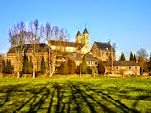
Graag nodigen wij U uit voor de plechtige Hoogmis aanstaande vrijdag met Gregoriaanse zang in de basiliek op de Kerkberg in Sint Odilienberg.


Hoogfeest van de HH. Petrus en Paulus, apostelen.

Graag nodigen wij U uit voor de plechtige Hoogmis aanstaande vrijdag met Gregoriaanse zang in de basiliek op de Kerkberg in Sint Odilienberg om 9.30u. De zang wordt verzorgd door de parochiële schola en de zusters Kanunnikessen van het Heilig Graf.

Op deze dag herdenken wij de marteldood van de apostelen Petrus en Paulus, de bekroning van hun getuigenis voor de Heer. Beiden hebben zij Christus openlijk beleden als de Messias, de Zoon van God, en zijn boodschap verkondigd ten koste van allerlei beproevingen. Overeenkomstig Jezus’ voorzegging is Petrus, geroepen tot een alomvattende herderlijke taak, zijn Heer gevolgd in zijn kruisdood. Hij stierf te Rome, hoogstwaarschijnlijk in het jaar 64.
Paulus, prediker van het evangelie dat hij in verbondenheid met Petrus en met de eerste gemeente van Jeruzalem overal heeft verkondigd, doorstond de laatste proef van zijn geloof eveneens te Rome, naar alle waarschijnlijkheid in het jaar 67.
Het graf van Petrus bevindt zich op de Vaticaanse heuvel en dat van Paulus aan de weg naar Ostia. Tot op de dag van vandaag bezoeken miljoenen pelgrims hun graven.

Nadat Wiro, Plechelmus en Otgerus zich terugtrokken op de berg die zijn van hofmeier Pepijn hadden gekregen, bouwden zij op de berg een kerk die zij toewijdden aan de H. Petrus. De oude naam van de Kerkberg is daarom ook wel Petrusberg. Later kreeg het dorp de naam Sint Odilienberg. De drie  heiligen gaan vaak de berg af, naar de huisjes van de houthakkers. Ze bezoeken de zieken en geven hun van de geneeskrachtige kruiden. Ze gaan bij de mannen zitten, als ze even uitrusten van het harde werken. Langzaam maar zeker winnen ze het vertrouwen van de mensen die daar wonen. Veel mensen gaan geloven in de God van Wiro, Plechelmus en Otger. De bisschoppen dienen de sacramenten toe, terwijl Otger preekt en aalmoezen uitdeelt aan de arme mensen. Af en toe komt ook de H. Willibrord op bezoek, de grote geloofsverkondiger in de Nederlanden.

Wij hopen dat vele Berger bewoners deze gelegenheid benutten om hun geloof te vieren, te verdiepen en te bezingen en daarbij ook hun patroonheiligen te gedenken die kenbaar zelf ook een grote devotie hadden voor de H. Petrus.

donderdag 29 juni 2017

Nunc Scio Vere (SS. Petrus et Paulus, Introitus) - Gregoriaans

Liturgy of the Hours Saints Peter and Paul

From a sermon by Saint Augustine

The martyrs had seen what they proclaimed

This day has been consecrated for us by the martyrdom of the blessed apostles Peter and Paul. It is not some obscure martyrs we are talking about. Their sound has gone out into all the earth, and their words to the ends of the world. These martyrs had seen what they proclaimed, they pursued justice by confessing the truth, by dying for the truth.
  The blessed Peter, the first of the Apostles, the ardent lover of Christ, who was found worthy to hear, And I say to you, that you are Peter. He himself, you see, had just said, You are the Christ, the Son of the living God. Christ said to him, And I say to you that you are Peter, and upon this rock I will build my Church. Upon this rock I will build the faith you have just confessed. Upon your words, You are the Christ, the Son of the living God, I will build my Church; because you are Peter. Peter comes from petra, meaning a rock. Peter, “Rocky,” from “rock”; not “rock” from “Rocky.” Peter comes from the word for a rock in exactly the same way as the name Christian comes from Christ.
  Before his passion the Lord Jesus, as you know, chose those disciples of his whom he called apostles. Among these it was only Peter who almost everywhere was given the privilege of representing the whole Church. It was in the person of the whole Church, which he alone represented, that he was privileged to hear, To you will I give the keys of the kingdom of heaven. After all, it is not just one man that received these keys, but the Church in its unity. So this is the reason for Peter’s acknowledged pre-eminence, that he stood for the Church’s universality and unity, when he was told, To you I am entrusting, what has in fact been entrusted to all. To show you that it is the Church which has received the keys of the kingdom of heaven, listen to what the Lord says in another place to all his apostles: Receive the Holy Spirit; and immediately afterwards, Whose sins you forgive, they will be forgiven them; whose sins you retain, they will be retained.
  Quite rightly, too, did the Lord after his resurrection entrust his sheep to Peter to be fed. It is not, you see, that he alone among the disciples was fit to feed the Lord’s sheep; but when Christ speaks to one man, unity is being commended to us. And he first speaks to Peter, because Peter is the first among the apostles. Do not be sad, Apostle. Answer once, answer again, answer a third time. Let confession conquer three times with love, because self-assurance was conquered three times by fear. What you had bound three times must be loosed three times. Loose through love what you had bound through fear. And for all that, the Lord once, and again, and a third time, entrusted his sheep to Peter.
  There is one day for the passion of two apostles. But these two also were as one; although they suffered on different days, they were as one. Peter went first, Paul followed. We are celebrating a feast day, consecrated for us by the blood of the apostles. Let us love their faith, their lives, their labours, their sufferings, their confession of faith, their preaching.